
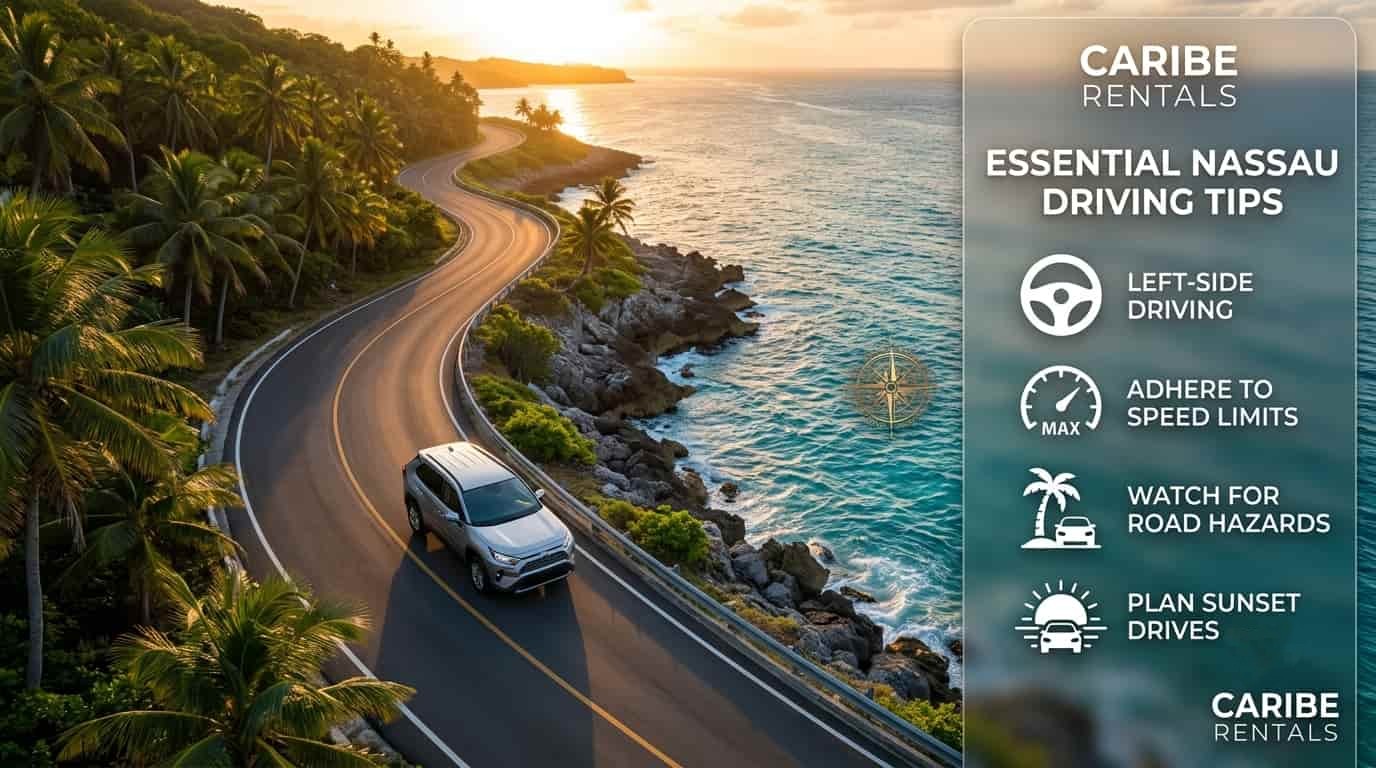
So, you’ve decided to rent a car in Nassau. Smart move. While taxis and tours are available, nothing beats the freedom of exploring New Providence Island at your own pace. You can chase the sunset to Clifton Heritage National Park, visit the quieter eastern beaches, or simply avoid the cruise ship crowds downtown.
However, driving in Nassau isn’t quite like driving back home. It has its own rhythm and rules. I’ve put together this guide to help you navigate the island with confidence.
What to Know Before You Book
First, Choose the Right Vehicle
Picking the right car makes all the difference in Nassau.
- A compact car or sedan is your best bet for most visitors. The roads in town are narrow, and parking in downtown Nassau is very tight . A small car is much easier to maneuver and park.
- Consider an SUV if you plan to go off the beaten path. While main roads are fine, some side streets have potholes, and an SUV gives you better clearance if you want to explore more rugged areas . They’re also great during the rainy season (June–November) since roads can flood .
- Luxury vehicles are available for those who want a premium experience, and they offer great comfort with air conditioning—a must in the tropical heat.
Book in Advance for the Best Rates
If you’re visiting during peak season (December–April), demand is high. Most data suggests you should book your rental car at least 90 days before your trip to get a below-average price . February is often the cheapest month to rent, while April tends to be the most expensive .
Documents You’ll Need
Make sure you have your valid driver’s license. For US and UK visitors, your standard license is valid for stays under three months. If you’re from any other country, you may need an International Driver’s Permit . The minimum age to rent is 21, but drivers under 25 usually pay an extra daily fee .
Driving in Nassau: Tips for the Road
1. Remember: Drive on the LEFT
This is the most important rule. The Bahamas drives on the left side of the road, a remnant of British colonial rule . If you’re used to driving on the right, this can be disorienting at first. Many cars are left-hand drive (imported from the US), which makes it feel even stranger—your car will be on the “wrong” side of the road.
Pro Tip: Take it very slow at first, especially when making turns and navigating roundabouts. Give yourself time to adjust .
2. Watch Out for Potholes and Narrow Roads
While the main roads are generally well-maintained, smaller streets can be rough . Potholes are common, and the roads in older neighborhoods get very narrow . You’ll also find that some driveways have very limited visibility, so be careful pulling out of them .
3. Local Driving Culture
Local drivers in Nassau are generally courteous, but you might encounter the occasional aggressive driver. It’s also been noted that some locals don’t always obey the road rules perfectly or indicate before turning . Stay alert and practice defensive driving. Expect the unexpected, and you won’t be caught off guard.
4. Speed Limits
Speeds are much lower than in the US.
- In towns/urban areas: 40 km/h (25 mph) or less .
- On highways/rural roads: 70-80 km/h (about 45-50 mph) .
5. Traffic and “Horn Language”
Traffic gets congested in the downtown area, especially during rush hour. Plan your travel times accordingly. Don’t be alarmed if you hear horns honking; islanders seem to have their own “horn language” to signal various things. It’s not always anger—sometimes it’s a greeting or a way to say “I’m here” .
6. Parking in Nassau
Finding parking in downtown Nassau can be a challenge . Look for paid parking lots or garages. Some options include the Bahamas Financial Centre, Parliament Street, and The Pointe Parking Garage . Be sure to park in the direction of oncoming traffic and never within 15 feet of a corner . Pay attention to signs, as regulations are strictly enforced .
7. Fuel and Gas Stations
Be aware that gas (petrol) is expensive in the Bahamas—often about $1.32 per liter, which is much higher than in the US . Most pumps are only open from 7:00 am to 7:00 pm, so fill up the tank when you see a station open, especially if you plan an extended trip .
Family Travel: Child Safety
If you’re traveling with kids, be aware of the strict child safety seat requirements:
- Infants under 20 lbs: Must be in a rear-facing child seat.
- Children 20-40 lbs: Must be in a convertible car seat.
- Children over 40 lbs but under 54 inches tall: Must use a booster seat .
Most car rental agencies charge a fee to provide these seats, so it’s often cheaper and easier to bring your own from home .
Your Local Choice: Native Quest Rentals
At Native Quest Rentals, we understand that a smooth rental experience is just as important as a smooth ride. We provide reliable and safe vehicles for everyone—from tourists and business travelers to families and locals. We offer flexible rental plans, free delivery in Nassau, and a range of vehicles from economy cars to luxury SUVs.
We’re here to make sure your island transportation is hassle-free so you can focus on enjoying the beauty of the Bahamas.
